
Business Survey Templates
Ready-to-run surveys for operations, process improvement, compliance, internal controls, risk, and logistics. Every template opens as a live survey you can read first, and 34 of their questions are printed here for you to copy.
- 20 templates
- 9-22 questions each
- 283 questions in total
- Free, no account needed
Every template below is a real survey built on SuperSurvey. Open any card to read the full question set with its answer scales, check how long it takes, and run a live preview without creating an account. Start from a template or make your own survey, then add the process names and team labels your business already uses. Alongside the templates there is a copy-ready question bank, a table that matches each survey to the decision it supports, and the part most guides leave out, which is what to do once the answers arrive. Looking for customer, staff, or market research surveys? Browse our complete template collection.
Which Business Survey Should You Run?
Start from the decision you have to make, not from the survey name. Question counts and completion times are measured from the templates themselves. Mode is our recommendation, and the reasoning behind each one is in the FAQ.
| You want to know | Survey type | When to run it | Length | Mode | Template |
|---|---|---|---|---|---|
| Whether a whole team, site or department is running well overall | Operational efficiency | Quarterly, or before a redesign | 15 q, 7 min | Confidential | Operational Efficiency Survey |
| Which stage of one named workflow stalls, and which handoff breaks | Process improvement | Before a redesign, and again after it | 10 q, 5 min | Confidential | Process Improvement Survey |
| Whether staff know the rules and feel safe reporting a concern | Compliance check | Yearly baseline, quarterly pulse | 15 q, 5 min | Anonymous | Compliance Survey |
| Whether each control in one process actually operates | Internal control health | Before testing, or after a system change | 16 q, 8 min | Identified | Internal Control Questionnaire |
| How well people handled the last incident | Crisis after-action review | Within two weeks of an incident | 16 q, 4 min | Confidential | Crisis Management Survey |
| Whether a carrier, warehouse, or dock change is working | Logistics and carrier review | After a delivery exception, or quarterly | 14 q, 4 min | Identified | Logistics Survey |
| Whether a congregation feels served, and how often people actually attend | Church feedback | Yearly, outside the busiest season | 15 q, 4 min | Anonymous | Church Survey |
| Whether members will renew, and who among them you never hear from | Membership feedback | Yearly, well before renewal season | 14 q, 4 min | Anonymous | Membership Survey |
Operations and Process Improvement Surveys
Use these when work is clearly slow but nobody can say where it stalls. Both split delay into its real causes, waiting on approvals, unclear handoffs, rework from bad inputs and tool friction, and both are answered by the people doing the work. They are a choice rather than a hierarchy: the operational efficiency survey asks whether a whole team, site or department is running well overall, while the process improvement survey follows one named workflow from its start trigger to its end trigger and finds the stage that stalls it. Neither is a smaller version of the other, because one is scoped by people and the other by a work item. Our employee survey questions cover the people side of the same problem.
Compliance and Internal Control Surveys
These two look alike and answer different questions. The Compliance Survey asks staff whether they know the rules and feel safe reporting a concern, so it goes out anonymous to a wide population. The Internal Control Questionnaire asks the owner of one process whether each of its controls actually operates, so it runs identified, one process per response. Run the first for culture, the second for assurance readiness. Passwords, access reviews, and system rollouts belong with the IT survey templates.
Risk and Crisis Readiness Surveys
Both surveys measure readiness, at different moments. The Crisis Management Survey is written to run twice: as a short pulse during or straight after an incident, and again as a preparedness check when nothing is happening. The Physical Security Survey is a standing site check on doors, badges, visitors, lighting, and whether people feel able to report a concern at all. Neither should ever ask a respondent to name a colleague.
Corporate and Enterprise Survey Templates
Corporate, commercial, company, enterprise, management: five words people type when they mean five different things. A programme is a sixth: when the thing being judged ran over months and a funder or a board is asking whether it worked, the program evaluation questionnaire puts that question to the people who took part. Here is what each one usually turns out to mean, and which template on this page answers it. Nothing new is hiding behind these labels, so the table sends you back into the same set rather than inventing another one. The exception is a room full of people you invited: an event feedback survey is its own instrument, taken the same day, about the programme and whether the time was worth it.
| If you searched for | You probably want | Start here |
|---|---|---|
| Corporate survey template | One survey run across several business units, with results split by unit | Operational Efficiency Survey |
| Enterprise survey template | Something that holds up at thousands of respondents, with a reporting floor per group | Compliance Survey |
| Commercial survey template | Feedback from a trading partner rather than from staff | Logistics Survey |
| Company survey template | A short general check you can send to everyone at once | Crisis Management Survey, preparedness mode |
| Management survey template | Evidence a manager can carry into a decision or a review | Internal Control Questionnaire |
| Business operations survey | Where the process breaks, in the words of the people running it | Operational Efficiency Survey |
- Running one survey across several business units. Keep the question wording identical everywhere and add one segment field for the unit. The moment a unit edits the wording, the comparison is gone.
- Set a reporting floor before you send. Decide the smallest group you will report on, usually around five responses, and publish that rule with the invitation. It protects respondents and it stops managers asking for a cut you cannot give.
- Set a minimum number of completed responses per site or role. Anything below it gets reported as directional rather than as a score. Deciding this in advance is what stops a thin cut being argued about later.
- One owner, one calendar. At scale the failure is rarely the questionnaire. It is three departments surveying the same people in the same month, which drives the response rate down for all three.
- Do not translate on the fly. If sites run in different languages, translate once, review with a native speaker in that business, and freeze the wording between waves.
Supply Chain and Logistics Surveys
This is the only template here that surveys people outside your own payroll. It runs in three modes. Send a short pulse after a delivery exception. Run a quarterly carrier or third-party review ahead of a renewal. Or send a post-change check after a new warehouse system or dock process. Send it identified, because a shipment score tells you nothing if you cannot trace it back to a lane. To measure how a supplier feels about working with you, use the customer service survey templates instead.
Business Survey Questions You Can Copy
Every question below comes from one of the templates on this page. The wording is already in use, not written for an article. They are plain agreement statements on a five point scale, positively worded, with one open question per set. Copy what you need. Or open the template to get the full set with its answer scales and branching already built.
Operations and process questions
- "In a normal week I have enough capacity to finish my work without routine overtime."
- "The work that reaches me arrives with everything I need to start it."
- "I can see the status of work in progress without having to ask anyone."
- "Approvals in my work happen quickly enough to keep the work moving."
- "In a normal week, how often do you redo work because something was wrong, missing or late?"
- "Which one of these costs this team the most time?"
- "What one change would give the team back the most time next month?"
From the Operational Efficiency Survey (15 questions, 6 min). The sixth item is a single pick of the one thing that costs the team the most time, and the last is an open text box.
Compliance and ethics questions
- "I know where to find the rules that apply to my job."
- "The compliance training I did in the last year used situations I actually meet in my job."
- "I know at least one way to raise a concern that does not go through my own manager."
- "I could raise a concern about this without it being held against me."
- "If somebody here raised a concern, I believe it would be looked into."
- "When deadlines get tight in my area, the rules still get followed."
- "What one change would make it easier to do the right thing in your job?"
From the Compliance Survey (15 questions, 6 min). Only two of its questions are required and the rest can be skipped, and the results are read as counts, not as a grade.
Internal control questions
- "A current written description of this process names who carries out each step."
- "No one person can take a transaction from start to finish without a second person checking it."
- "Every approval in this process is given within a written limit of authority."
- "Balances this process feeds are reconciled on a set schedule by somebody who did not post them."
- "When a step cannot be done as designed, the exception is logged and signed off."
- "Every weakness raised at the last review has a named owner and a due date."
- "Which control in this process would you least want tested tomorrow, and why?"
From the Internal Control Questionnaire (16 questions, 8 min). The owner of one process answers Yes, Partly, No or not applicable, and the last item is an open text box. Treat the answers as an input to your testing plan, not as assurance evidence in themselves.
Crisis and continuity questions
- "I knew what my own role was as soon as this was declared."
- "I could find the plan or the instructions I needed without asking somebody."
- "I knew who was making the decisions at each stage."
- "The first alert reached me through a channel I actually check."
- "The updates told me what to do next, not only what had happened."
- "Decisions I was waiting on arrived soon enough to be useful."
- "What one change would have made the biggest difference on the day?"
From the Crisis Management Survey (16 questions, 6 min). The first question names the incident or exercise, so run it after a drill in a quiet period too and compare the two.
Logistics and carrier questions
- "Shipments arrive on or before the date we were promised."
- "When a delivery date slips, we are told before the date passes, not after."
- "Shipments arrive complete, with the quantities the paperwork says."
- "Tracking tells us where a shipment is without us having to ask."
- "When something goes wrong, we hear it from them before we hear it from our customer."
- "The invoice matches the quote, with no charges we cannot account for."
From the Logistics Survey (14 questions, 4 min). The first question names the lane or service, so score one provider per lane rather than across everything it carries.
How to change this wording without breaking your own comparison
Swap in your own nouns freely. Replace "this control" with the control name, "my work site" with the site name, and "this workflow" with the process as your teams call it. Concrete nouns raise the quality of the answers, and they cost you nothing.
Do not flip a statement to its negative to keep people alert. Reverse-worded items lower the reliability of a scale rather than protecting it, and they produce a small number of respondents who answer the opposite of what they meant.[5] Keep every item positive and let the scale do the work.
Agreement scales carry a bias of their own: some people lean toward agreeing whatever the statement says.[6] Where the answer would change a real decision, ask people to choose between two concrete statements instead of rating one.
Freeze the wording between waves. If you change an item, you have started a new series, and the honest thing is to report it as one. Add new questions at the end rather than editing the ones you already have history for.
Turning Business Survey Results Into an Action Plan
This is the part that decides whether the survey was worth sending, and it is the part almost every template page leaves out. In a 2023 Quantum Workplace panel study of 1,068 employees, 65% said their organization fails to act effectively on survey results.[2] Qualtrics found something similar from the other direction: 92% of more than 11,800 employees across 20 countries said feedback matters, while 7% said their organization acts on it well.[1] Neither figure is about your business specifically. Both describe the default you are working against.
| Day | What you do | Who owns it | What comes out |
|---|---|---|---|
| 0 to 2 | Close the survey and check coverage: which sites, shifts, or teams came in under your minimum | Survey owner | A note on which cuts are readable and which are directional only |
| 3 to 10 | Publish the raw scores to everyone who answered, before you have a plan | Survey owner | One page of favorable percentages per question, plus the response rate |
| 10 to 20 | Run a short session with the teams that scored lowest and ask what is behind the number | Line manager | Two or three causes per low score, in their words |
| 20 to 30 | Pick two or three fixes. Name an owner and a date for each. Publish the ones you are not doing, and why | Leadership | A short action list nobody has to chase |
| 30 to 90 | Report progress monthly against that list | Action owners | Visible movement, or an honest reason there is none |
| 90 plus | Re-run the same questions, unchanged, and show the before and after | Survey owner | A trend, and a response rate that tells you whether people still believe you |
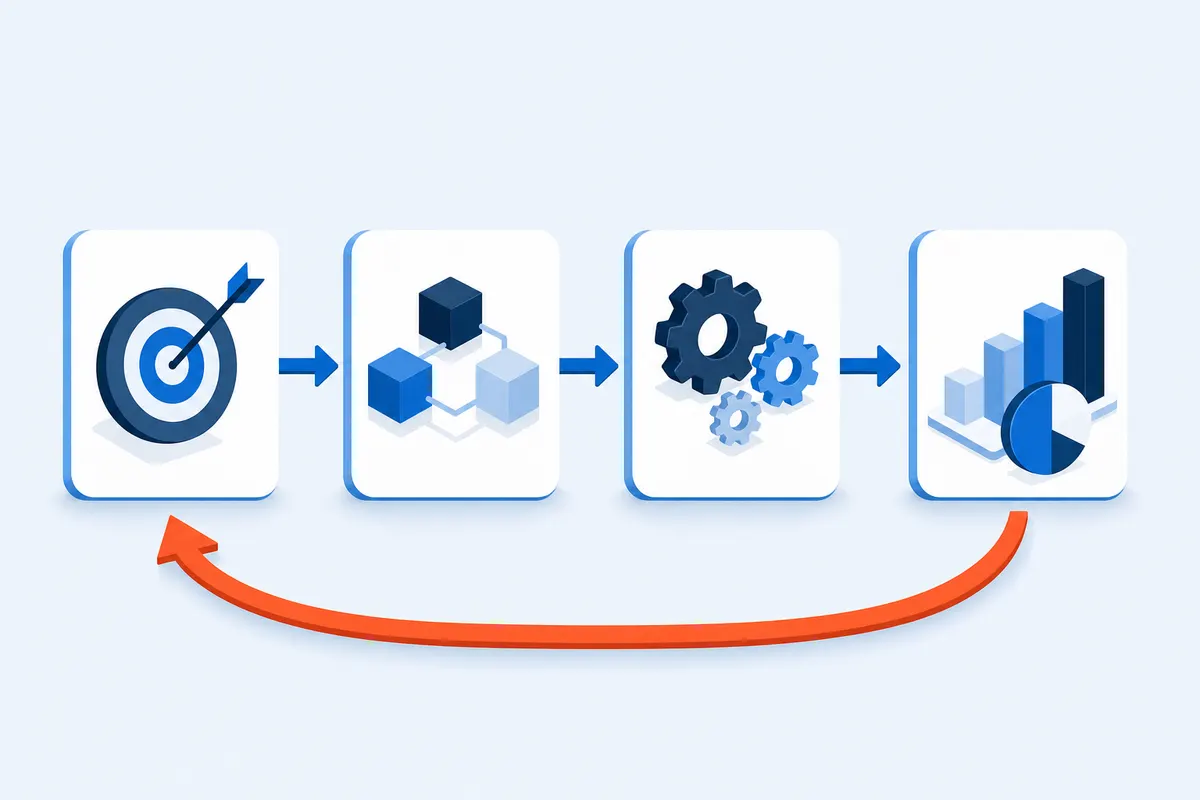
What a low score actually means, by survey type
Operations. A low score on waiting points at queues, approvals, and other teams, so the fix is usually a decision right or a service level, not more effort. A low score on rework points upstream: the inputs arriving at that step are wrong. Fixing rework at the desk where it appears almost never works.
Compliance. High policy awareness with low comfort reporting is the pattern to watch. It means people know the rules and do not trust what happens next, and it will not improve by sending the training again. Low awareness with high comfort is the easier problem, because it is a communication fix.
Internal control. A low score on evidence usually means the control works and nobody wrote down what proves it. A low score on ownership means the control has no owner at all. The second is a finding waiting to happen; deal with it before the first.
Crisis. Low scores on clarity of instructions and single source of truth almost always travel together, and both are cheap to fix before the next event. Low scores on timely decisions are a governance problem and take longer.
Physical security. Treat the open text as the real output. A list of specific places and times of day is directly actionable, where an average score across a site is not.
Logistics. Score by lane and carrier, never as one number. A single poor lane can pull a good carrier below a threshold and trigger a re-tender you did not need.
Business Survey FAQ
What is a business survey?
A business survey is a short questionnaire that measures how part of an organization actually runs, rather than how people feel about working there. The subject is a process, a control, a site, or a supplier. Operations, compliance, internal controls, risk, physical security, and logistics are the six kinds on this page. The output is meant to feed a decision: fix this handoff, retest this control, re-tender this lane.
What questions should a business survey include?
Anchor it with one broad item, then ask about the specific things you can change. A good operations set covers waiting, rework, handoffs, approvals, and visibility of work. A good compliance set covers policy awareness, training relevance, comfort reporting, and belief that reports are handled fairly. Finish with one open question that asks for a single change. 34 questions from five of our templates are printed in the question bank above, so you can copy the wording instead of writing it.
How many questions should a business survey have?
Eight to twelve for anything you want people to finish at work. SurveyMonkey analysed roughly 100,000 surveys and found abandon rates climbing once a survey ran past 7 to 8 minutes, with completion falling by 5% to 20%.[3] Every template on this page is 10 to 16 questions and takes 3 to 8 minutes. If you need more than that, split it into two waves and keep the core items in both.
Should a business survey be anonymous, confidential, or identified?
It depends on whether you need to follow up with the person. Use anonymous when honesty is the risk, as with compliance and physical security. Use confidential when you need to compare teams or sites but nothing should reach a manager unfiltered, as with operations and crisis reviews. Use identified when the whole point is a follow-up conversation, as with internal controls and carrier reviews. Pick one, say which before the first question, and never promise the stronger one by accident.
My department is only twelve people. Can the survey really be anonymous?
Not by policy alone. On a small team, role, tenure, or writing style can identify someone even with no name attached. If you want to keep the promise, skip demographic breakdowns, keep open text out or summarize it into themes before anyone reads it, and report at the level above. If you cannot do those things, call it confidential rather than anonymous and say so plainly. A promise you quietly break costs you every future survey.
What is a good response rate for an internal business survey?
Trend against your own last wave before you compare with anyone else. As a rough orientation, an academic review of 490 published organizational studies found an average response rate of about 52.7% for surveys sent to individuals.[4] Internal surveys with visible leadership backing usually run higher. Treat a very low rate as information about trust, and treat 100% as a question about whether people felt free to skip it.
How often should you run a business survey?
Match the cadence to how fast the thing you are measuring can change. Operations and compliance suit a quarterly pulse with a yearly baseline. Internal controls fit the assurance calendar: before testing, and after any system or process change. Crisis reviews are event-driven, so run one within two weeks of an incident. Physical security is usually yearly per site. Logistics runs either after a delivery exception or quarterly ahead of a renewal.
What questions should a compliance survey ask?
Four things, in this order. Can people find the policies? Do they understand the risks in their own role? Do they feel safe reporting a concern? Do they believe a report would be handled fairly? Awareness without comfort reporting is a false positive, and it is the pattern that shows up most often. The Compliance Survey keeps all four in the core set and puts topic modules behind an optional switch.
Does an internal control survey prove we are compliant?
No. It collects what the owner of one process says about its controls, which is an input to your testing plan and never a substitute for testing. It is good at finding steps with no clear owner, approvals outside a written limit, or weaknesses with no due date. Use it to decide where to test harder, then test.
What should a crisis management survey cover?
Six things. Did people know their role? Did updates arrive in time? Were the instructions usable? Was there one source of truth? Were escalation paths clear? Were decisions made in time? Keep it short, because you are asking people during or just after a bad week; our template asks 16 questions in about 6 minutes. Run the same items as a preparedness check in a quiet period, so you have a baseline to compare against.
How do you survey warehouse, delivery, or shift staff with no work email?
Use a link people can open on a phone, and put it where they already look. A QR code at the dock or the time clock works well. So does a shift handover message or a tablet at the entrance. Keep it under five minutes. Open the field period across every shift pattern, not just weekday days. Ask the site lead to give people paid time to answer. A survey people fill in on their own time collects only the angriest and the keenest.
How do you turn business survey results into an action plan?
Publish the scores before you have answers, pick two or three fixes with named owners and dates, and say out loud which problems you are not fixing this quarter. Then re-run the same questions and show the movement. The 30 day plan above lays out the whole sequence. Acting on the results is the part organizations skip, and skipping it is what makes the next survey fail.
Methods, Limits and Sources
How these templates are built
Items use five point agreement scales and positive wording, following the survey-methods research cited below. Question counts and completion times on this page are measured from the templates themselves, not estimated. Eight of the 20 live templates in this category are carded here, and five of them have questions printed in the open rather than behind an account. Our process and contributors are on the Authors page.
Why some well-known question sets are not reproduced here
Some well-known workplace survey instruments are licensed rather than public. Gallup's Q12 items are copyrighted and cannot be reproduced or administered outside a participating company without permission, and the Utrecht Work Engagement Scale is free for academic use only. Plenty of free template pages reprint them anyway. We write our own items, which is why the wording here differs from sets you may have seen elsewhere.
Limits
The figures on this page describe surveys in general, not business surveys specifically, because no published benchmark exists for compliance, internal control, or logistics surveys as a category. Response rates vary with industry, country, and how the survey is announced. Treat every number here as orientation and trend against your own prior wave first. The action plan section is drawn from published research on what organizations do after a survey, not from a controlled trial of this particular sequence.
Disclosure
SuperSurvey is our own survey builder, so we have an interest in you using it. Every template on this page opens as a live preview you can read without an account, every question is printed on the page in full, and nothing here is gated or for sale.
References
- Qualtrics. 2021 Global Employee Experience Trends Report, published December 2020. More than 11,800 full-time employees across 20 countries. qualtrics.com
- Quantum Workplace. "65% of Employees Say Organizations Don't Take Effective Action on Employee Survey Results," November 2023. Panel study of 1,068 employees fielded May 2023, drawn from an opt-in Best Places to Work sample. quantumworkplace.com
- SurveyMonkey Research. "How long should a survey be?" Analysis of roughly 100,000 surveys. surveymonkey.com
- Baruch, Y. & Holtom, B.C. "Survey response rate levels and trends in organizational research." Human Relations 61 (2008): 1139-1160. doi:10.1177/0018726708094863
- Chyung, S.Y., Barkin, J.R. & Shamsy, J.A. "Evidence-based survey design: the use of negatively worded items in surveys." Performance Improvement 57, no. 3 (2018). doi:10.1002/pfi.21749
- Pew Research Center. "Writing Survey Questions," on acquiescence bias in agree-disagree formats. pewresearch.org
- Association of Certified Fraud Examiners. Occupational Fraud 2026: A Report to the Nations, 14th ed., May 2026. 2,402 investigated cases across 143 countries. acfe.com
Browse Other Template Categories
Those are eight of the 20 live business survey templates, five of them with a copy-ready set of questions. Back to top.